
A Frustrating Problem That's More Common Than You Think
You press the button on your garage door remote, the door starts its descent, and then — just before it reaches the floor — it reverses and goes right back up. You try again. Same thing. Maybe it works on the third attempt, maybe it doesn't. Either way, you're stuck standing in your driveway in Salisbury wondering what went wrong.
This is one of the most common garage door complaints we hear from homeowners across Rowan County, and the good news is that it usually has a straightforward explanation. The bad news? Ignoring it can lead to bigger problems down the road. Let's walk through the most likely causes and what you can do about each one.
Understanding Why Your Garage Door Reverses
Modern garage doors are equipped with safety mechanisms designed to prevent the door from closing on a person, pet, or object. These systems are required by federal law and have prevented countless injuries since they became standard in the 1990s. However, when something goes wrong with these safety features — or with other components of your garage door system — the door may reverse even when there's nothing in its path.
Here are the most common reasons this happens:
1. Misaligned Safety Sensors
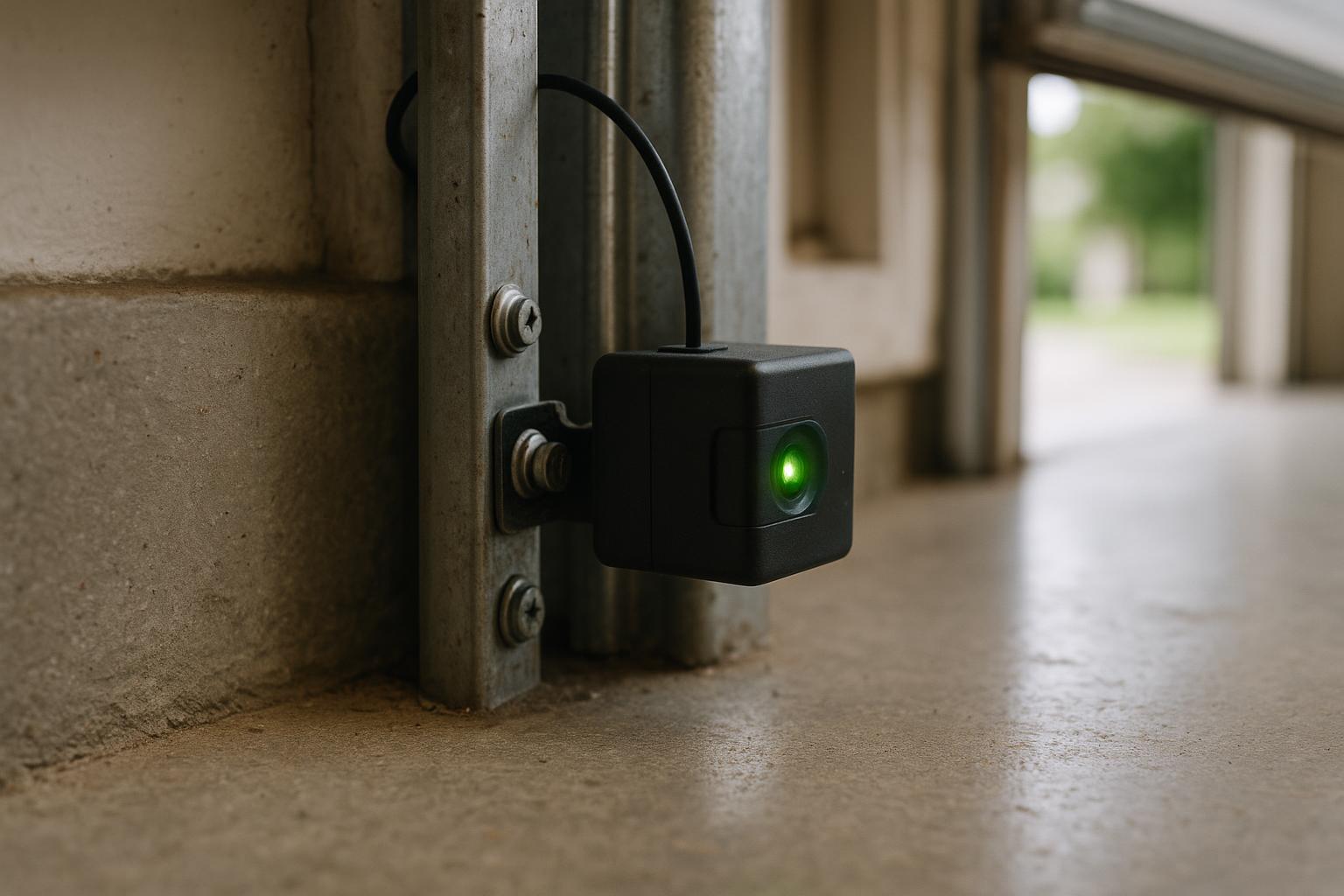
Every garage door opener manufactured after 1993 includes a pair of photo-eye sensors mounted near the bottom of the door tracks, one on each side. These sensors send an invisible beam across the opening. If something breaks that beam while the door is closing, the system reverses the door immediately.
Over time, these sensors can get bumped, shifted, or knocked out of alignment. When the two sensors can't "see" each other, the system thinks there's an obstruction and reverses the door. This is the single most common cause of the reversing problem we see in homes throughout Salisbury and the surrounding areas like Spencer and Granite Quarry.
What to check:
- Look at the small LED lights on each sensor. Both should be lit and steady. If one is blinking, that sensor is likely out of alignment.
- Gently adjust the sensor that's blinking until the light becomes steady.
- Make sure nothing is blocking the sensors — cobwebs, dirt, leaves, or even a small toy can interfere with the beam.
- Wipe the sensor lenses with a clean, dry cloth.
2. Something Is Triggering the Close Force Limit
Your garage door opener has adjustable settings that control how much force it uses when opening and closing the door. If the close force limit is set too low, the opener may interpret normal resistance — like the weight of the door itself — as an obstruction and reverse.
This can happen after a temperature change. In North Carolina, our weather swings between hot summers and chilly winters, and these temperature fluctuations can cause metal tracks and components to expand and contract. A door that closed fine in October might start reversing in January.
What to check:
- Consult your opener's manual for instructions on adjusting the close force limit. Most units have a small adjustment screw or dial on the back or side of the motor unit.
- Make small adjustments — a quarter turn at a time — and test after each change.
- If you're not comfortable making this adjustment yourself, this is a quick fix for a professional technician.
3. Worn or Damaged Rollers and Tracks
If your garage door rollers are worn, cracked, or caked with debris, the door won't travel smoothly along the tracks. The extra friction can trigger the opener's safety reversal. Similarly, if the tracks themselves are bent, dented, or misaligned, the door may bind or stick at a certain point during its travel.
What to check:
- Visually inspect the rollers on both sides of the door. Nylon rollers that are cracked or steel rollers that don't spin freely should be replaced.
- Look along the tracks for any visible bends, dents, or gaps where the track sections meet.
- Listen for grinding, scraping, or popping sounds when the door moves — these are signs of track or roller issues.
4. Broken or Weakening Springs
Your garage door springs do the heavy lifting — literally. They counterbalance the weight of the door so the opener doesn't have to work as hard. When springs weaken over time or break entirely, the door becomes much heavier for the opener to manage. The opener may struggle to control the door's descent and trigger a reversal.
Important safety note: Garage door springs are under extreme tension and can cause serious injury if handled improperly. If you suspect a spring issue, do not attempt to repair or replace the springs yourself. This is a job for a trained technician with the right tools and experience.
5. Wiring or Electrical Issues
Less commonly, the reversing problem can stem from damaged wiring between the opener and the sensors, a short circuit, or even a failing logic board in the opener unit itself. Homes in older neighborhoods in Salisbury, China Grove, and Kannapolis sometimes have garage door systems that are 15 to 20 years old, and electrical components can degrade over that kind of timeframe.
What to check:
- Look for any visible damage to the wires running from the opener to the sensors — fraying, chew marks from rodents, or loose connections.
- If the opener behaves erratically in other ways (lights flashing randomly, opening on its own), an electrical issue is more likely.
When to Call a Professional
If you've checked the sensors, cleaned the lenses, and verified there are no obvious obstructions but the door still reverses, it's time to bring in a professional. Some of these issues — especially spring problems, track realignment, and opener repairs — require specialized knowledge and tools to fix safely.
At Salisbury Garage Door, we diagnose reversing issues every week. Most of the time, we can identify and fix the problem in a single visit. Whether it's a simple sensor realignment or a more involved spring replacement, we'll explain what's going on before we do any work so you know exactly what you're paying for.
Prevent Future Problems with Regular Maintenance
Many of the issues that cause a garage door to reverse can be caught early with routine maintenance. A professional tune-up typically includes:
- Inspecting and lubricating all moving parts — rollers, hinges, springs, and tracks
- Testing and aligning the safety sensors
- Checking the balance of the door
- Tightening hardware that may have loosened from daily vibration
- Testing the auto-reverse function to make sure it's working correctly
We recommend scheduling a maintenance visit at least once a year, ideally in the spring or fall before the extreme temperatures of summer and winter put extra stress on your system.
Don't Ignore a Reversing Garage Door
A garage door that won't close all the way isn't just annoying — it's a security risk. An open garage is an invitation for theft, pests, and weather damage. If your door has been acting up, don't wait for the problem to get worse. Whether you're in Salisbury, Rockwell, or anywhere else in Rowan County, our team is ready to help you get your garage door back on track — literally.
Give Salisbury Garage Door a call and let us take a look. We'll show up on time, figure out what's going on, and get it fixed right the first time.