
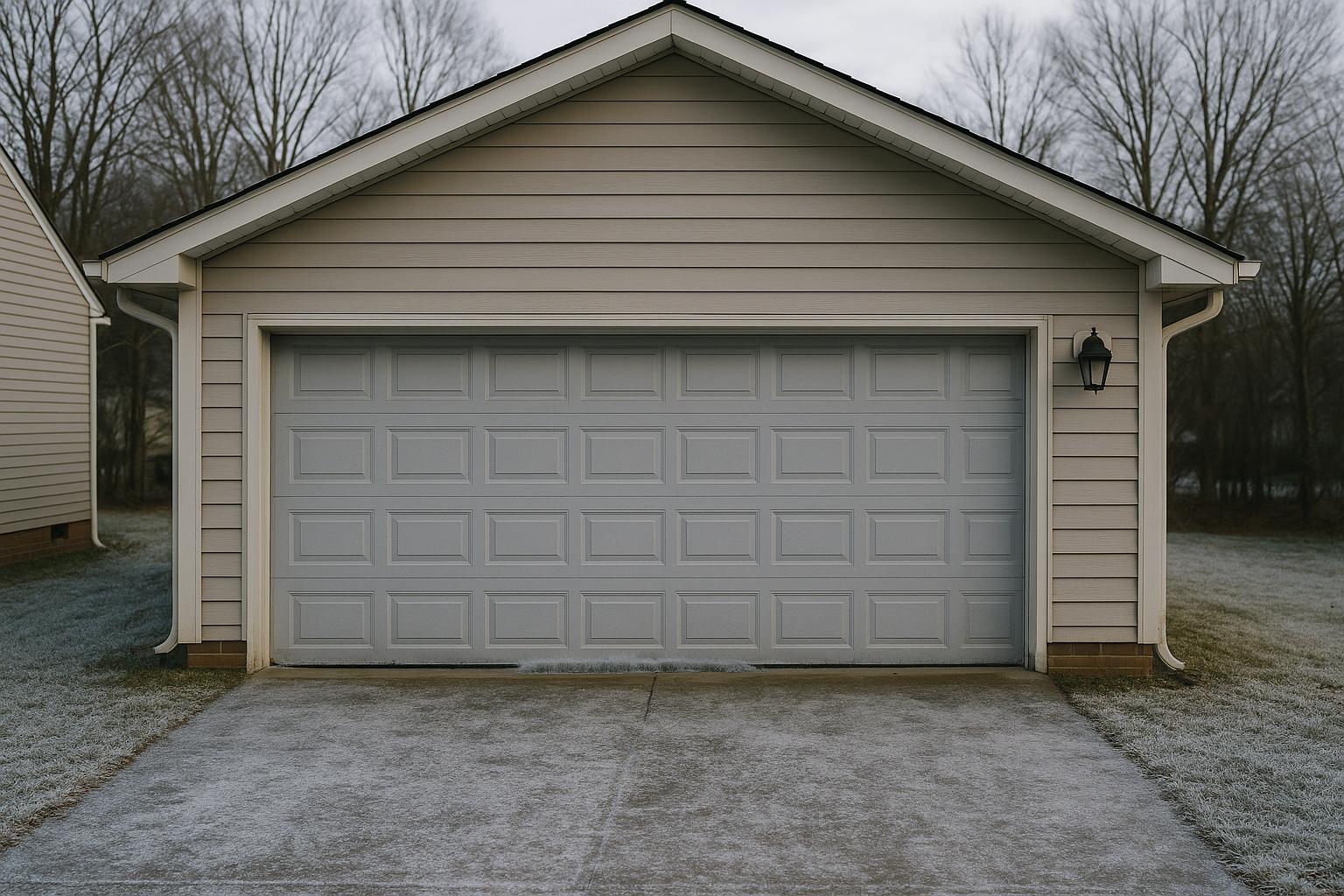
Cold Weather and Garage Doors Don't Always Get Along
You're running late on a cold Salisbury morning, you hit the button on your garage door opener, and nothing happens. Or maybe the door starts to move but groans, stutters, and stops halfway up. If this sounds familiar, you're not alone. Cold weather is one of the most common reasons garage doors malfunction, and it catches homeowners off guard every winter.
The good news is that most cold-weather garage door problems have straightforward causes — and many of them are preventable. Let's walk through the most common reasons your garage door won't cooperate when temperatures drop and what you can do about each one.
Contracted Metal and Hardened Grease
Garage doors are made up of dozens of metal components — springs, tracks, rollers, hinges, and hardware. When temperatures drop, metal contracts slightly. On its own, this contraction is minor, but when combined with old, thickened lubricant on the tracks and rollers, the added friction can be enough to prevent your door from opening smoothly.
Lubricant that works perfectly fine in warm weather can become stiff and gummy in the cold. This forces your opener to work harder, and in some cases, the motor simply can't generate enough force to move the door.
What You Can Do
- Apply a silicone-based garage door lubricant to the tracks, rollers, hinges, and springs before winter sets in. Silicone-based products resist cold temperatures much better than standard grease.
- Avoid using WD-40 as a long-term lubricant — it works as a solvent but doesn't provide lasting lubrication in cold conditions.
- If the door is already stuck, try applying lubricant and then manually lifting the door (after disconnecting the opener) to work the lubricant into the moving parts.
The Weatherstripping Is Frozen to the Ground
This is one of the most common cold-weather garage door problems in Rowan County, especially after a night of freezing rain or when melting snow refreezes overnight. The rubber weatherstripping along the bottom of your garage door can freeze directly to the concrete floor of your driveway or garage threshold, effectively gluing the door shut.
When your opener tries to lift a door that's frozen to the ground, it may strain the motor, strip gears, or trigger the safety reverse feature — causing the door to stop and reverse.
What You Can Do
- Never force the door open with the opener if you suspect it's frozen. This can damage the opener, the door panels, or the weatherstripping itself.
- Use a heat gun or hair dryer to gently melt the ice along the bottom seal. You can also pour warm (not boiling) water along the base to break the bond.
- Once freed, clear away any standing water or ice from the area where the seal meets the ground.
- To prevent future freezing, apply a thin coat of silicone spray or cooking spray to the bottom weatherstripping. This creates a barrier that makes it harder for ice to bond.
Your Garage Door Springs Are Under Extra Stress
Garage door springs do the heavy lifting — literally. They counterbalance the weight of the door so your opener doesn't have to do all the work. In cold weather, springs lose some of their elasticity, which means they can't support the door's weight as effectively. This puts extra strain on the opener motor and can make the door feel heavier than usual.
If your springs are already aging or weakened, cold weather can push them past their limits. A spring that was barely holding on in October might snap in January.
What You Can Do
- Listen for unusual sounds when the door operates — excessive creaking, popping, or grinding can indicate spring stress.
- If the door feels noticeably heavier when you lift it manually, the springs may need adjustment or replacement.
- Never attempt to adjust or replace garage door springs yourself. These components are under extreme tension and can cause serious injury. Call a professional for spring service.
The Opener's Safety Sensors Are Misaligned or Obstructed
Your garage door opener has two small photo-eye sensors near the base of the door tracks. These sensors send an invisible beam across the opening, and if anything breaks that beam, the door won't close — or it may reverse. In cold weather, these sensors can be knocked out of alignment by contracting metal brackets, or the lenses can become fogged or frosted over.
What You Can Do
- Check that both sensor lights are lit and steady. A blinking light usually indicates misalignment or an obstruction.
- Wipe the sensor lenses clean with a soft cloth to remove frost, condensation, or dirt.
- Make sure nothing — snow buildup, leaves, or debris — is blocking the sensor beam path.
- If the sensors appear aligned and clean but the door still won't operate properly, the wiring connections may have loosened due to temperature changes.
Your Garage Door Panels Have Warped or Shifted
Wooden garage doors are especially susceptible to cold-weather warping. As moisture in the wood contracts and expands with temperature swings, panels can bow or shift slightly. Even steel and aluminum doors can develop minor alignment issues as the temperature fluctuates throughout a Salisbury winter.
A warped or misaligned panel can cause the door to bind in the tracks, making it difficult or impossible for the opener to move it.
What You Can Do
- Visually inspect the door panels from inside the garage. Look for gaps, bowing, or sections that don't sit flush against each other.
- Check the tracks on both sides to make sure they're parallel and that the door moves freely within them.
- If you notice warping or track misalignment, contact a garage door technician to assess whether the panels need replacement or the tracks need adjustment.
Preventive Steps to Prepare Your Garage Door for Winter
The best way to avoid cold-weather garage door headaches is to prepare before the first freeze. A little maintenance in the fall can save you from being stranded in your driveway on the coldest morning of the year.
- Schedule a professional maintenance visit. A technician can inspect springs, cables, rollers, and the opener to catch problems before winter makes them worse.
- Lubricate all moving parts with a cold-rated silicone lubricant.
- Inspect and replace worn weatherstripping along the bottom and sides of the door.
- Test the door balance by disconnecting the opener and manually lifting the door halfway. If it doesn't stay in place, the springs may need attention.
- Check the opener battery backup if your model has one — cold weather can drain batteries faster than expected.
When to Call a Professional in Salisbury
Some cold-weather garage door issues are easy to handle on your own — a quick wipe of the sensors or a shot of lubricant on the tracks. But if your door still won't open after basic troubleshooting, or if you suspect a spring, cable, or opener motor problem, it's time to call in a professional.
At Salisbury Garage Door, we help homeowners across Salisbury, Spencer, Granite Quarry, China Grove, Kannapolis, and Rockwell keep their garage doors working reliably through every season. Whether you need emergency repair on a frozen morning or want to schedule preventive maintenance before winter arrives, we're here to help.
Don't wait until you're stuck. Contact Salisbury Garage Door today to schedule a winter maintenance check or get fast, reliable repair service when your garage door won't cooperate with the cold.