
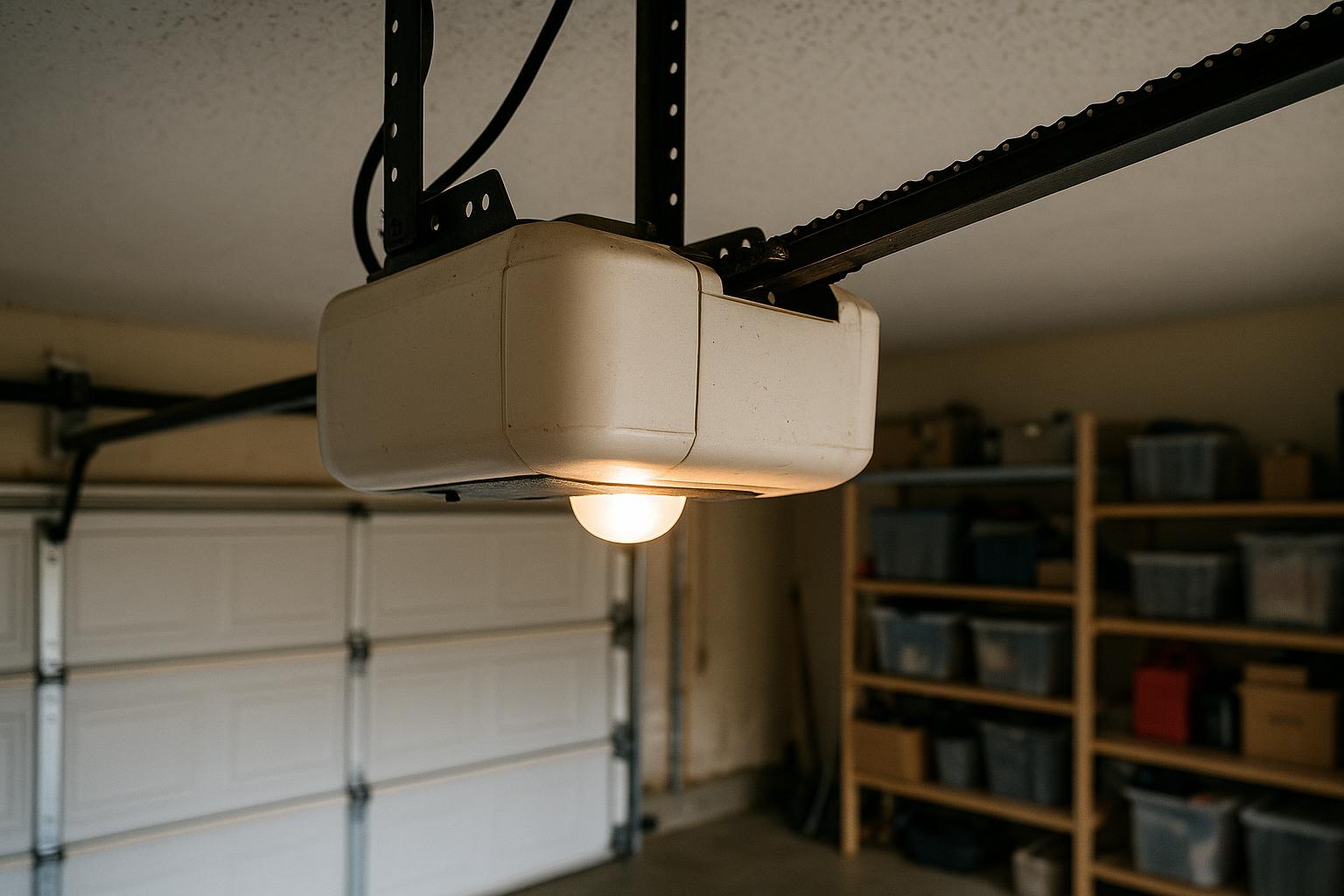
Your Garage Door Opener Won't Last Forever
Your garage door opener is one of those things you never think about — until it stops working. Most homeowners in Salisbury use their garage door as the primary entrance to their home, which means that opener is cycling up and down multiple times a day, every single day. Over time, that adds up to serious wear and tear.
The good news is that garage door openers rarely fail without warning. They almost always give you signs that something is going wrong well before they quit entirely. If you know what to look for, you can plan ahead, avoid getting locked out of your own garage, and potentially save money by addressing small issues before they become big ones.
How Long Should a Garage Door Opener Last?
A typical garage door opener lasts between 10 and 15 years, depending on the brand, how often it's used, and how well it's been maintained. Some higher-end models with DC motors and belt drives can push past 15 years with proper care. On the other hand, a chain-drive opener in a busy household might start showing its age closer to the 10-year mark.
If your opener is approaching that age range and you're noticing any of the symptoms below, it's probably time to start thinking about a replacement rather than sinking money into repairs.
7 Warning Signs Your Garage Door Opener Is Failing
1. The Opener Is Louder Than Usual
All garage door openers make some noise, but if yours has gotten noticeably louder over time, that's a red flag. Grinding, rattling, or straining sounds often indicate worn-out gears, a failing motor, or loose internal components. Chain-drive openers are naturally louder than belt-drive models, but even a chain drive shouldn't sound like it's struggling to do its job.
2. The Door Moves Slowly or Hesitates
If your garage door used to open smoothly but now pauses, jerks, or moves at an inconsistent speed, the opener's motor may be losing power. This can also be caused by worn gears inside the opener unit. A door that hesitates before moving or takes significantly longer to open and close than it used to is telling you something is wrong.
3. The Opener Works Intermittently
Sometimes it opens. Sometimes it doesn't. If your garage door opener responds to the remote or wall button inconsistently, the problem could be as simple as a dying remote battery — but it could also point to a failing logic board or motor. If you've replaced the batteries and the problem persists, the opener itself is likely the issue.
4. The Door Reverses for No Apparent Reason
While we've covered situations where a door reverses before hitting the floor in a previous post, an opener that randomly reverses mid-cycle — whether opening or closing — may have a failing circuit board or faulty safety sensors. If the sensors are clean, aligned, and unobstructed but the problem continues, the opener's internal electronics may be going bad.
5. You Notice Vibration in the Opener Unit
When a garage door opener runs, it should be relatively stable. If the unit mounted to your ceiling is visibly shaking or vibrating excessively during operation, internal components are likely worn or damaged. Excessive vibration can also loosen the mounting hardware over time, which creates a safety concern.
6. The Opener Doesn't Respond to the Remote from the Same Distance
If you used to be able to open your garage door from the end of the driveway but now have to be right in front of it for the remote to work, the opener's receiver may be failing. This is different from a weak remote battery — if fresh batteries don't fix the range issue, the opener is the problem.
7. The Motor Runs but the Door Doesn't Move
This is one of the more obvious signs. If you hear the motor humming or running but the garage door stays put, the internal gears that connect the motor to the drive mechanism have likely stripped out. This is a common failure point in older openers and usually means the unit needs to be replaced rather than repaired.
Should You Repair or Replace Your Opener?
This is the question we get most often from homeowners here in Salisbury and throughout Rowan County. The answer depends on a few factors:
- Age of the opener: If it's less than 8 years old, a repair usually makes sense. If it's over 12, replacement is often the smarter investment.
- Cost of the repair: If the repair costs more than half the price of a new opener, go with the replacement. You'll get a warranty, updated safety features, and years of reliable service.
- Safety features: Openers manufactured before 1993 don't have the auto-reverse safety features that are now required by federal law. If your opener is that old, replacing it isn't just smart — it's a safety issue, especially if you have children or pets.
- Noise concerns: If your current opener is a loud chain-drive model and your garage is attached to your home, upgrading to a belt-drive opener can make a dramatic difference in noise levels. Many homeowners in neighborhoods across Salisbury, Spencer, and Granite Quarry have made this switch and been thrilled with the results.
What to Look for in a New Garage Door Opener
If you've decided it's time for a replacement, here are the key features to consider:
- Drive type: Belt-drive openers are quieter and require less maintenance. Chain-drive openers are more affordable and extremely durable. Screw-drive openers fall somewhere in between.
- Motor power: A standard single-car door typically needs a 1/2 HP motor. Heavier or oversized doors may require 3/4 HP or more.
- Smart features: Many modern openers offer Wi-Fi connectivity, allowing you to monitor and control your garage door from your phone. You can check whether you left the door open from anywhere — a feature that's surprisingly useful.
- Battery backup: Power outages happen, especially during storm season here in North Carolina. An opener with a built-in battery backup lets you continue using your garage door even when the power is out.
- Security features: Look for openers with rolling code technology, which changes the access code every time you use the remote. This prevents code theft and keeps your home more secure.
Why Professional Installation Matters
While some handy homeowners attempt to install garage door openers themselves, professional installation ensures the job is done safely and correctly. An improperly installed opener can damage your garage door, void the manufacturer's warranty, or create safety hazards. The opener needs to be properly aligned with the door, the force and travel limits need to be calibrated, and the safety sensors need to be installed at the correct height and angle.
At Salisbury Garage Door, we handle opener installations throughout Salisbury, Kannapolis, China Grove, Rockwell, and the surrounding communities. We'll help you choose the right opener for your door and your budget, and we'll make sure everything is set up and tested before we leave.
Don't Wait Until You're Stuck
A failing garage door opener is an inconvenience. A dead garage door opener — especially on a cold morning when you're trying to get to work — is a real problem. If you're noticing any of the warning signs we've covered here, don't ignore them. Give us a call and let us take a look. Whether your opener needs a simple fix or a full replacement, we'll give you an honest assessment and get your garage door working reliably again.